Go back
The Aymara Algorithm and Computational Translation
15 july 2026
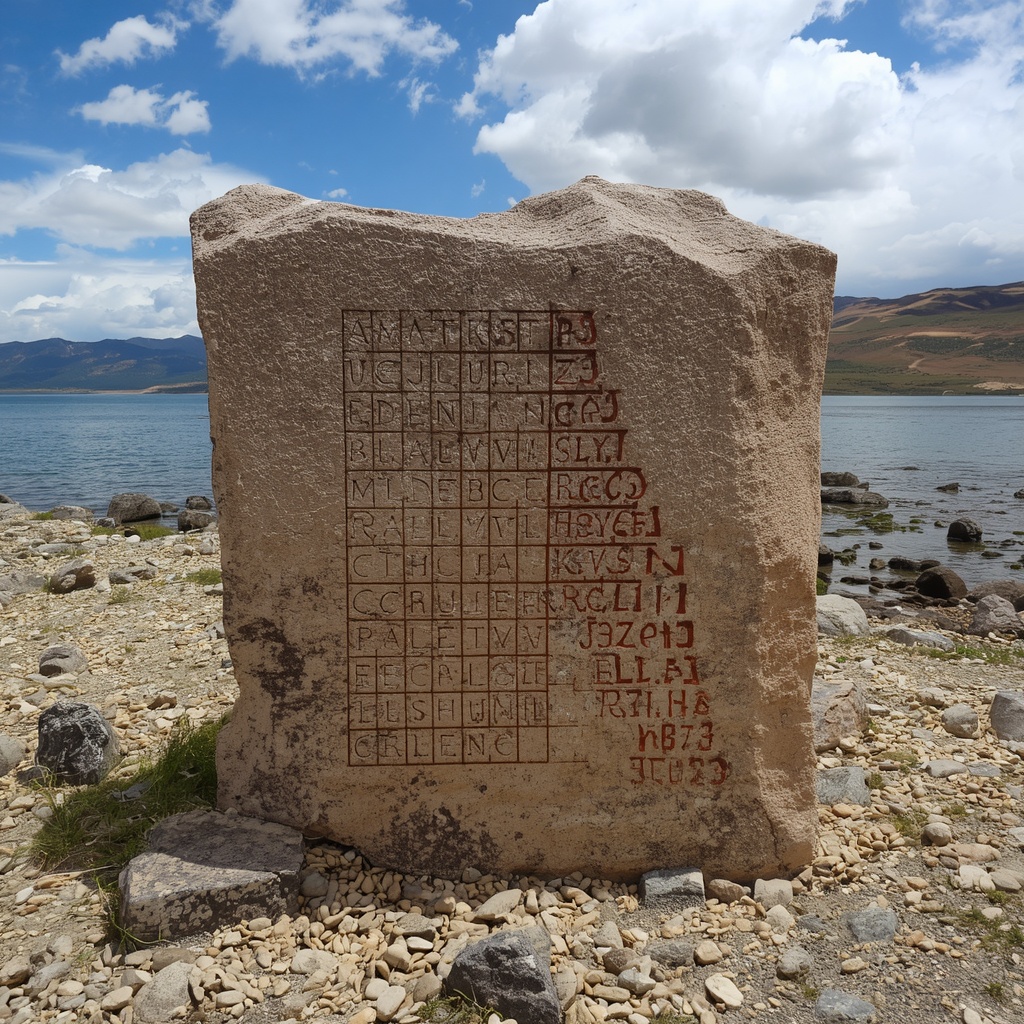
In 1992 I spent 2 months in Bolivia, I visited a number of places including lake TitiKaka (the highest navigable lake in the world, Lapaz, Tiwanaku and many others. The people are welcoming and warn. The official language is Spanish, but the Quechua and Aymara people continue to speak thier natives languages.
Attention !!! Some photos with 1992 quality ...
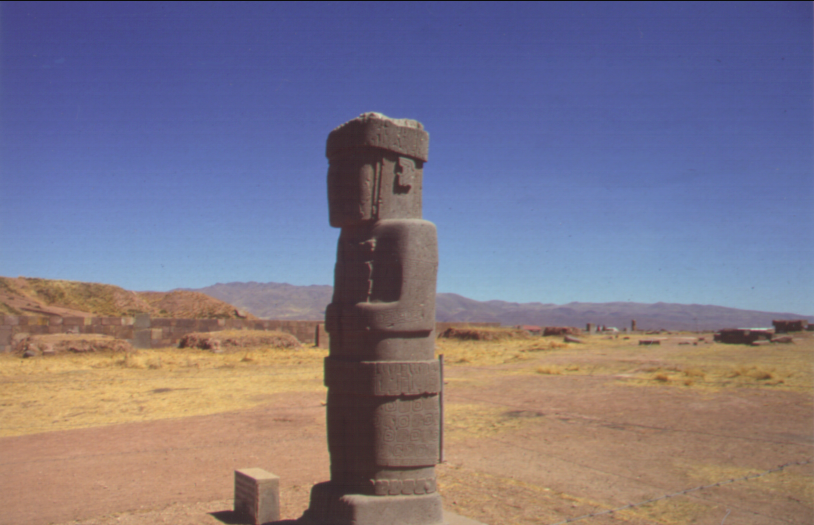
The Bennet Monolith 7.3 M high 20 tons
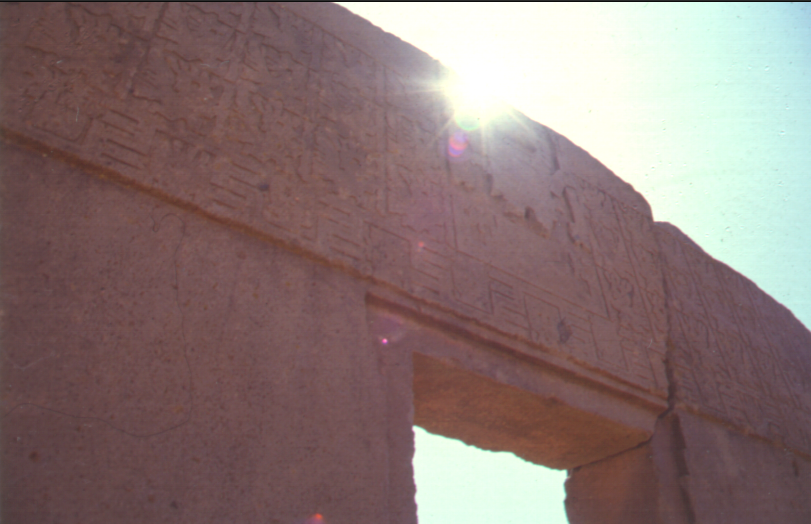
The Gateway of the sun
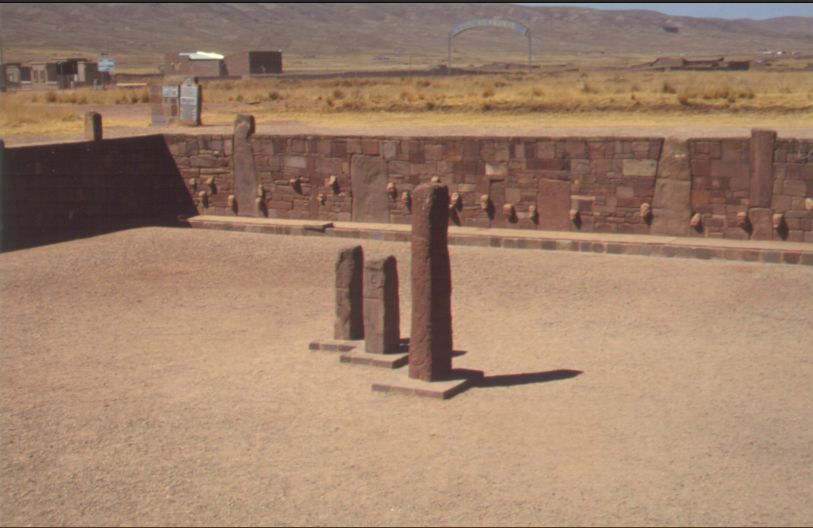
The Tiwanaku temple
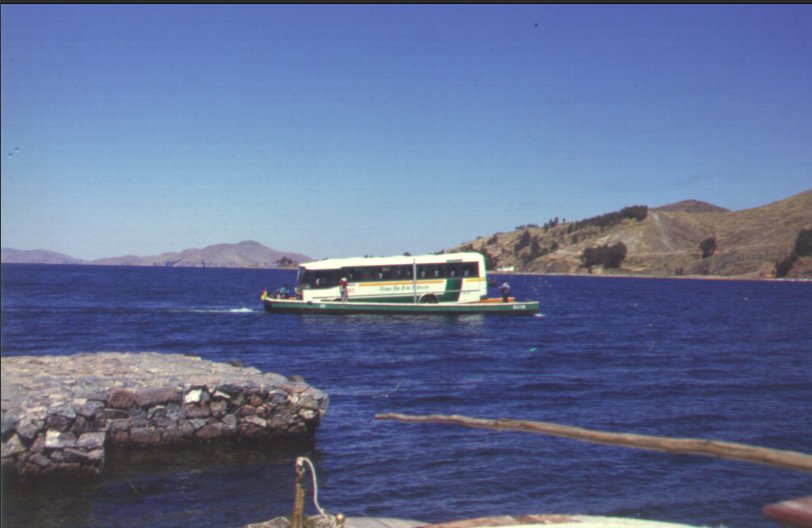
Go to Copacabana a city on the shore of lake Titicaca, No bridge

Sunset on the shore of lake Titicaca

Copacabana Sunset on the shore of lake Titicaca
Ok what is the point of this ?
The Aymara algorithm
By treating Aymara grammar an ancient Andean language with strict logical syntax as a matrix of algebraic operators, the algorithm enabled fast, bidirectional multi-language translations without recursive translation limits.
Core Linguistics and the ILRA Bridge
Meaning is built by adding specific, predictable suffixes to root words. He possess a unique conceptualization of time : they talk about the past as being "in front" of them because it is know and visible to the mind's eye, while the unknown futur is "behind" them as it is unseen.
Mr Guzman used these syntactical traits to develop a conceptual bridge language called ILRA (Intermediate Language for Machine Translation). Instead of translating directly from a Source Language to a Target Language, the Aymara algorithm follows three distinct phases :
1. Syntactic Deconstruction : Translates the source text into the algebraic structures of ILRA.
2. Matrix Logic Processing : Performs matrix calculations to deduce pure mathematical meaning.
3. Target Generation : Translates ILRA concurrently into any desired target language.
This matrix-based, algebraic system allowed one language (ILRA) to bridge multiple target languages (such as Spanish, German, French, and English). This framework demonstrated how indigenous syntactical structures could solve complex computational translation problems.
The original algorithm and code from 1980s are not completely open-sourced or public, but with python, numpy and the help of Ollama and LLM model GLM, it's quite easy and really really fast to build a "translating machine"
Python Simulation: Agglutinative Matrix Translation
NOTE : HTML has made some change is the spacing and format , if you copy/paste this code, make sure to verify spacing. You can refer to PEP 8 Style Guide
Prerequisites :
A linux pc or a linux vm with a recent vesion of python
This script requires the `numpy`, the library is installed from bash with pip
create a venv with python -v .venv
activate the venv, with source .venv/bin/activate
install the numpy package with pip3 install numpy
Python Script (`aymara_translation.py`)
import numpy as np
# 1. Define our Matrix Space (ILRA Intermediate Vocabulary & Logic)
# Rows: Root concepts, Columns: Suffix/Modal logical modifiers
CONCEPT_MAP = {
"ut": 0, # House (Root)
"muna": 1 # To want/love (Root)
}
SUFFIX_MAP = {
"base": 0, # Nominal base form
"ni": 1, # Possession suffix ("with / has")
"ru": 2 # Directional suffix ("towards")
}
# 2. Target Language Generative Matrices (Mapping ILRA coordinates to syntax) SPANISH_DECODER = {
(0, 0): "casa",
(0, 1): "dueño de casa (el que tiene casa)",
(0, 2): "hacia la casa",
(1, 0): "querer"
}
ENGLISH_DECODER = {
(0, 0): "house",
(0, 1): "house owner (one who has a house)",
(0, 2): "towards the house",
(1, 0): "to want"
}
def aymara_to_matrix(root, suffix="base"):
"""
Simulates the Aymara parsing engine: Convert word + suffix into an algebraic matrix vector.
"""
# Create an empty state vector matrix
state_matrix = np.zeros((len(CONCEPT_MAP), len(SUFFIX_MAP)))
# Locate the algebraic coordinate
row = CONCEPT_MAP.get(root)
col = SUFFIX_MAP.get(suffix)
if row is not None and col is not None:
state_matrix[row, col] = 1 # Active operator state
return state_matrix
else:
raise ValueError("Unknown linguistic element.")
def matrix_to_target(state_matrix, target_decoder):
"""
Translates the structural ILRA matrix directly into the final target language output.
"""
# Find the active indices via matrix operations
indices = np.argwhere(state_matrix == 1)
if len(indices) == 0:
return "Unknown"
# Extract coordinate tuple
coord = (indices[0][0], indices[0][1])
return target_decoder.get(coord, "Translation not mapped")
# --- EXECUTION DEMONSTRATION ---
if __name__ == "__main__":
# Input Aymara word components: "uta" (house) + "-ru" (directional suffix meaning 'towards')
aymara_root = "ut"
aymara_suffix = "ru"
print(f"Parsing Aymara: '{aymara_root}' + '-{aymara_suffix}'")
# Step 1: Encode phrase into the mathematical ILRA bridge representation
ilra_matrix = aymara_to_matrix(aymara_root, aymara_suffix)
print("\nGenerated ILRA Matrix Representation:")
print(ilra_matrix)
# Step 2: Use the matrix vector to concurrently decode into target languages
translation_es = matrix_to_target(ilra_matrix, SPANISH_DECODER)
translation_en = matrix_to_target(ilra_matrix, ENGLISH_DECODER)
print(f"\nTranslated to Spanish: {translation_es}")
print(f"Translated to English: {translation_en}")
And voila... a very old lagnguage that can help to build a translating machine. May be there is other algorithm hidden in other languages... like semitic origin languages or indo-European origin, maybe LLM can help to find them.
To finish another interesting point (with the help of google and gemini)
In the context of the Aymara algorithm, Bolivian engineer Iván Guzmán de Rojas discovered that the core limitation of standard machine translation engines was their reliance on traditional Western, bivalent logic (where statements must strictly be True or False).
The Aymara language naturally utilizes a trivalent (three-valued) logical system, explicitly accommodating Uncertainty/Doubt directly into its grammatical syntax. Guzmán formalized this linguistic phenomenon mathematically to construct the ILRA interlingua engine.